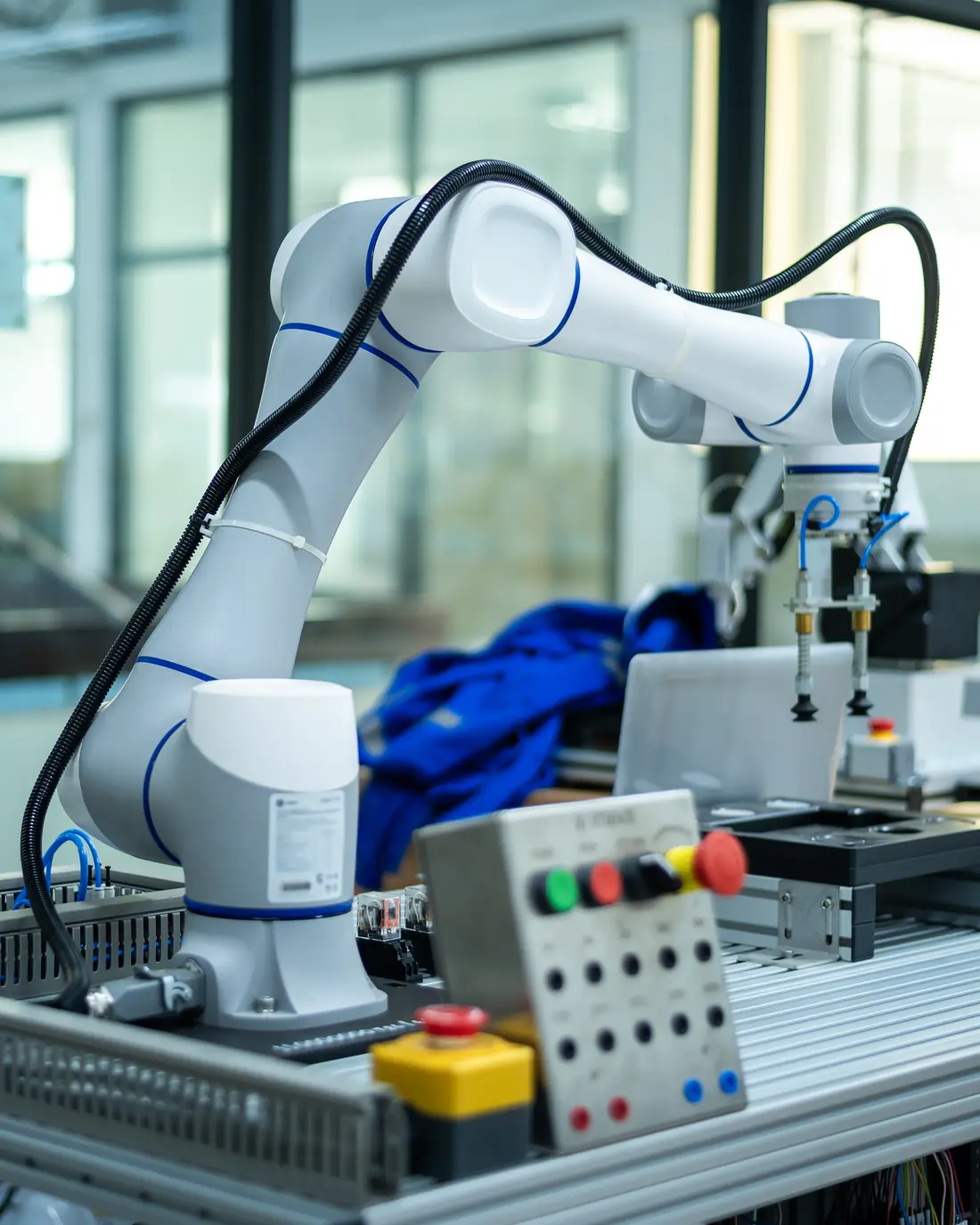
Solis International supplies robotics and automation solutions from global manufacturers to businesses in Turkey and the Middle East. We cover six categories, from industrial robots and autonomous mobile robots to intralogistics, service, cleaning and supporting machinery. You describe the problem, and we handle sourcing, import and delivery, so you deal with one partner instead of several suppliers.
We are a distributor and trading partner, not a manufacturer. Because we work with several global manufacturers, we can match robotics and automation solutions to your site rather than push a single product line. Our customer network in manufacturing, automotive, hospitality and healthcare also shows us which questions matter most in each setting. In selected projects, we can also consider local assembly or production.
Below, each category gets a short explanation and a list of typical applications. Links from our sector pages jump straight to the matching section. However, you don't need to start with a category at all. For example, you may simply want to cut manual transport at the end of a line, or plan cleaning for a large floor area. In short, the best robotics and automation solutions start with a clear description of the problem.
Our robotics and automation solution categories
01
Industrial Robots
Industrial robots take over repetitive production tasks such as welding, assembly, packaging and machine tending with consistent precision. As a result, your staff can move from heavy, monotonous work to quality control and planning. This group also includes collaborative robots (cobots), which can share a workspace with people. The right model depends on payload, reach and the speed of your line, so we look at all three before we suggest an option.
Autonomous mobile robots (AMRs) use sensors and mapping software to plan their own routes through a facility. Unlike older guided vehicles, they need no tape or magnetic strips on the floor, and they steer around obstacles. That makes them a good fit for moving materials, spare parts or samples between production lines, warehouses and hospital corridors. Moreover, when your layout changes, you update the map in software instead of rebuilding the route.
Line feeding and work-in-progress transport
Material flow between warehouse and production
Moving samples, medicines and supplies in hospitals
Intralogistics covers every movement of goods inside your facility: receiving, storage, picking, shipping and line supply. This category brings together conveyors, automated storage and retrieval systems, sorters and the software that runs them. The goal is to reduce manual handling and search time while you improve stock accuracy. In addition, these systems can work with your warehouse management system (WMS), so orders and inventory stay in sync.
Conveyor and sorting lines
Automated storage and retrieval systems
Order picking and shipment preparation
Internal material distribution in hospitals and plants
Service and delivery robots carry food, drinks, room items or medicines in busy places such as hotels, restaurants and hospitals. Your staff then gets more time for guests and patients. Many of these robots work with elevators and automatic doors, so they can deliver between floors on their own. Models with screens can also greet visitors, guide them to a location and share basic information, which helps your front-of-house team during peak hours.
Cleaning robots sweep, scrub and vacuum large floor areas such as lobbies, corridors, production halls and warehouses on their own. You can schedule them for night shifts or quiet hours, and many models report which areas they have covered. Your cleaning team can therefore focus on detailed tasks. In healthcare facilities, these robots also help you keep a regular, traceable cleaning plan across shared spaces.
The machinery and equipment category covers production machines and auxiliary equipment that complete a robotic system. When you build a robot cell, you often also need grippers, feeders, safety fencing or a custom workstation. Adding this equipment to the same sourcing process makes ordering and delivery tracking simpler. Consequently, you can plan every part of your robotics and automation solutions project with a single partner.
Every site is different, and the same robot can perform very differently in two facilities. That is why we review the points below with you before we prepare a quote for robotics and automation solutions. Then we assess the matching options with our manufacturing partners.
01
Payload and work area
We look at the weight and size of the parts to move or process, and at the area the robot must reach. We also clarify your cycle time target. This way, you avoid a system that is oversized or underpowered.
02
Integration with existing systems
We check early on how the robot will talk to your WMS, MES, ERP, elevators and automatic doors. Integration needs shape both model choice and project timing, so they belong at the start.
03
Site conditions and floor layout
We review floor surfaces, thresholds, ramps, aisle widths and traffic density with you. For mobile robots in particular, this information forms the basis of route planning.
04
Safety requirements and standards
For robots that share space with people, we go through the risk assessment, guarding measures and relevant standards together with the manufacturer. As a result, your safety plan is ready before installation.
05
Service and spare parts planning
We clarify the installation, training and service scope with the manufacturer during the quotation stage. We also discuss the supply plan for critical spare parts before you sign.
06
Pilot first, then scale
Where the project allows, we suggest a pilot in a limited area first. Then we review the results with you and decide together whether and how to scale up.
For independent data on robot types and the global market behind robotics and automation solutions, see the reports on the International Federation of Robotics (IFR) website.
HOW WE WORK
Four steps from need to delivery
01
We define the need together
We start by listening to your operation, workflows and goals. Then we agree with you on which tasks are a good fit for automation.
02
We match the right solution
We select suitable products from the portfolio of global manufacturers we represent and share technical documents and alternatives with you.
03
We clarify the offer and scope
Pricing, lead time, installation, training and service scope are agreed together with the manufacturer at the quotation stage.
04
We manage import and delivery
We handle sourcing, import and delivery through our distribution network in Turkey and the Middle East. For selected projects, we also consider local assembly.
Frequently asked questions
What is the difference between industrial robots and cobots?
Traditional industrial robots suit high speeds and heavy payloads, and in most applications they work inside a fenced cell. Cobots, on the other hand, use force limiting and sensors, so they can share a workspace with people when the risk assessment allows it. Therefore cobots fit lighter, slower tasks such as assembly, testing or machine tending. We help you decide which type matches your task and your floor.
What is the difference between an AMR and an AGV?
An AGV (automated guided vehicle) follows tape, magnetic strips or floor markers along a fixed route. When something blocks its path, it usually stops and waits. An AMR, however, uses sensors and a map to steer around obstacles and choose its own route. As a result, AMRs suit sites with changing layouts or busy foot traffic. For fixed, repetitive routes, an AGV can still make sense.
Can we start with a pilot project?
Yes, and where the project allows it, we recommend doing so. In a pilot, you test robotics and automation solutions in a limited area within your real workflow. This lets you answer questions about integration, staff adoption and site conditions before a larger investment. We agree on the pilot's scope, duration and commercial terms together with our manufacturing partner. Then we use the results to plan the rollout with you.
How do I request a quote?
Use the customer form on our contact page to tell us your sector, the robotics and automation solutions you need and your main goal. If possible, also add your site layout, the loads involved, your existing software systems and your target timeline. Our sales team then contacts you and asks any follow-up questions. We clarify installation, training and service scope with the manufacturer during the quotation stage.
Do you work with manufacturers looking for a distributor in Turkey?
Yes. We partner with global robotics, automation and next-generation technology manufacturers that want to enter or grow in Turkey and the Middle East. We handle direct B2B sales, regional distribution and import processes. In addition, we connect your products with our customer network in manufacturing, automotive, hospitality and healthcare. You can send a partnership request through the manufacturer form on our contact page.
Plan your robotics and automation project
Tell us what you need, and our sales team will review suitable robotics and automation solutions with you. We then manage sourcing, import and delivery from start to finish.
Looking for a distributor in Turkey and the Middle East?
If you are a global robotics or automation manufacturer, let's bring your products to B2B buyers in the region together. Let's discuss how our direct sales, regional distribution and customer network can support your market entry.