

Automotive automation for OEM plants and suppliers
Solis International supplies automotive automation equipment from global manufacturers to carmakers and supplier plants in Turkey and the Middle East. We sell industrial robots, autonomous mobile robots and intralogistics systems directly to B2B buyers. As a result, you can hand repetitive tasks in the body shop, on the assembly line and in the warehouse over to robots and move your people to higher value work.
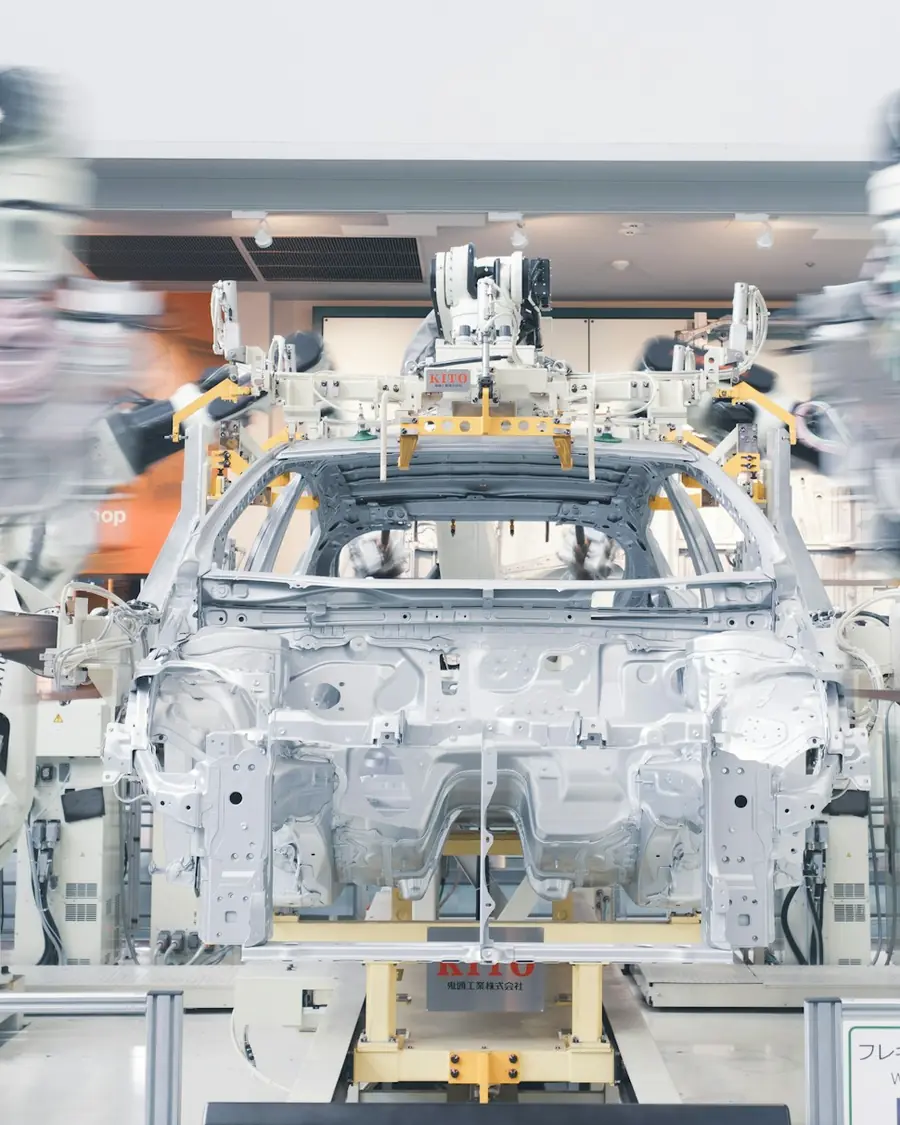
Car production runs on tight schedules, a large number of part variants and strict quality targets. Therefore, a small stoppage on one line can ripple through the whole supply chain. Robots help here because they repeat the same motion reliably, keep parts flowing and make cycle times predictable. They also take heavy and awkward tasks away from your operators.
We are a distributor and trading partner, not a manufacturer. So we help you choose the right product from the portfolios of several global manufacturers. Then we manage sourcing, import and delivery on your behalf. In selected projects, we can also add our local assembly and production capability.
Common challenges in car manufacturing
Heavy, repetitive work
Lifting, positioning and fixing body panels wears operators out. In addition, repeating the same motion for a whole shift raises the risk of errors and workplace injuries.
Delays in line feeding
When parts do not reach a station on time, the line stops. This gets harder when many vehicle variants share one line and every station needs the right part in the right sequence.
Shifting demand at suppliers
Tier-1 and tier-2 suppliers make different parts for different customers. As a result, material flow changes often, and fixed conveyors do not always offer enough flexibility.
Manual end-of-line handling
Packing finished parts into containers and building pallets takes a lot of manual labour. Moreover, poor stacking can lead to transport damage and customer complaints.
Where automotive automation fits
These are the needs we see most often in automotive automation projects. Depending on your plant, you can start with one of them or combine several.
Body shop handling and joining
Industrial robots load sheet metal parts into fixtures, move them between joining stations and hold consistent positions for welding and similar tasks. Meanwhile, operators can focus on inspection and quality.
Line feeding and kitting
Kitting means collecting all the parts one vehicle needs into a single container before assembly. Robots and mobile carriers prepare these kits and then deliver them to the line in sequence.
Material flow at supplier plants
Tier-1 and tier-2 suppliers can use robots to unload presses, injection moulding machines and machining centres. In addition, AMRs can carry those parts on to the next station.
End-of-line palletizing
Robots at the end of the line place finished parts into containers, stack the containers on pallets and prepare them for shipping. So the stacking pattern stays the same on every shift.
AMR transport between warehouse and line
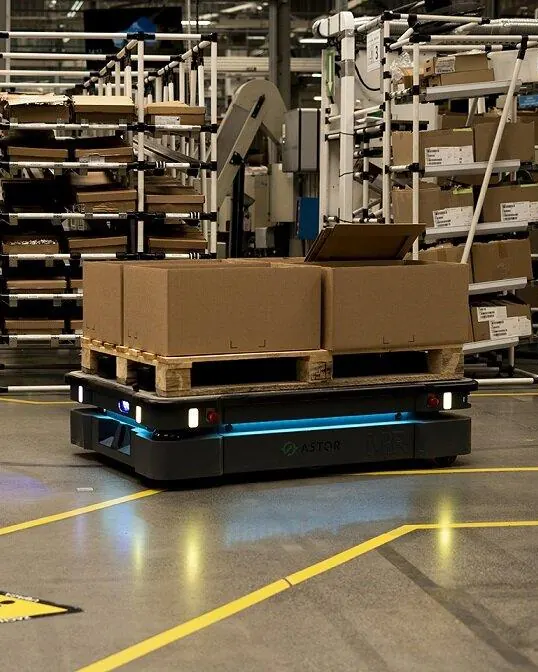
An AMR, or autonomous mobile robot, plans its own route without fixed tracks or floor wires. It brings parts from the warehouse to the line and returns empty containers, which cuts forklift traffic.
Keeping production areas clean
Dust and small debris create risks for both quality and safety. For this reason, autonomous cleaning machines can clean aisles and production areas on a regular schedule.
Robotics solutions for automotive plants
These are the product groups we offer for automotive automation. You can find more detail on each group on our robotics and automation page.
Industrial Robots
Industrial robots take on body shop, joining and palletizing tasks that need high payloads and precise positioning.
Autonomous Mobile Robots (AMR)
Autonomous mobile robots handle part and container traffic between the warehouse and the assembly line without fixed infrastructure.
Intralogistics Systems
Intralogistics systems connect line feeding, kitting and end-of-line flow into one process, so parts spend less time waiting.
Machinery & Equipment
Production machinery helps supplier plants align part processing and preparation steps with their robot cells.
How we approach automotive automation projects
We start every project by understanding your line and your goal. First, we discuss the task you want to automate, part weights, cycle time and your current layout. Then we choose products that match those needs from the portfolios of the global manufacturers we work with. That way, you avoid investing in a system that is too large or too small for the job.
OEM plants and supplier plants have different needs. For example, a carmaker may look for many robots for a long line, while a supplier may want to start with a single cell. In both cases, we manage sourcing, import and delivery for you. We also clarify the scope of installation, training and service together with the manufacturer during the quotation stage.
For current figures on how widely the automotive industry uses industrial robots, see the reports from the International Federation of Robotics (IFR).
Four steps from need to delivery
- 01
We define the need together
We start by listening to your operation, workflows and goals. Then we agree with you on which tasks are a good fit for automation.
- 02
We match the right solution
We select suitable products from the portfolio of global manufacturers we represent and share technical documents and alternatives with you.
- 03
We clarify the offer and scope
Pricing, lead time, installation, training and service scope are agreed together with the manufacturer at the quotation stage.
- 04
We manage import and delivery
We handle sourcing, import and delivery through our distribution network in Turkey and the Middle East. For selected projects, we also consider local assembly.
Automotive automation FAQ
Do you work with tier-1 and tier-2 suppliers?
Yes. Besides OEM plants, we also sell to tier-1 and tier-2 suppliers. At supplier plants, projects often begin with a single robot cell, a palletizing station or a few AMRs. Therefore, we help you find a starting point that fits your scale. Then you can expand the system as your needs grow.
Can robots work with our existing production line?
In most cases they can, but it depends on how your line is built. Before we quote, we want to understand your layout, your control systems and your safety requirements. For example, a robot cell may need guarding, light curtains or area scanners. We clarify the integration and safety scope together with the manufacturer during the quotation stage.
Should we choose cobots or industrial robots?
Cobots, or collaborative robots, can share space with people after a proper risk assessment. So they suit light assembly and inspection tasks well. However, heavy body panels and high-speed tasks usually call for industrial robots. We help you make the right choice based on part weight, speed and the layout of your work area.
What information do you need for a quote?
To begin, a short description of the task you want to automate is enough. In addition, part sizes and weights, target cycle time, shift pattern and your current line layout help us prepare an accurate offer. A layout drawing or a short video is also very useful. With this information, we share suitable product options and the next steps.
Do you deliver to plants in the Middle East?
Yes. Besides Turkey, we serve B2B customers across the Middle East through regional distribution. We plan sourcing, import and delivery around the country where your plant is located. As a result, automotive companies with plants in more than one country can run purchasing through a single trading partner.
Discuss your automotive automation project
If you run an OEM plant or a supplier plant and want to automate a task on your line, tell us what you need. Our sales team will share suitable product options and the next steps with you.