

Hospital robots for delivery, logistics and cleaning
Hospital robots take over repetitive internal logistics, such as moving lab samples, medication, linen and supplies, so nurses get time back for patients. Solis International sells, imports and distributes autonomous delivery, service and cleaning robots from global manufacturers to hospitals and healthcare groups in Turkey and the Middle East. As a result, you work with one B2B partner from product selection to delivery.
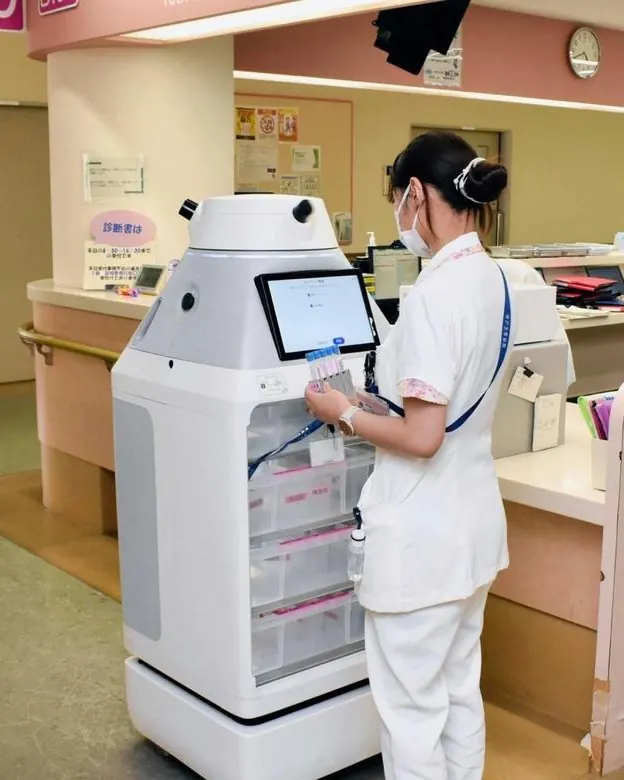
In a busy hospital, wards, the lab, the pharmacy and central stores exchange items all day. Many of these short trips fall to nurses, who leave the ward to drop off a sample or fetch a missing item. Autonomous robots can handle these routine runs on a planned schedule. Your staff can then spend more of each shift on work that needs clinical skill. The robot supports the team; it does not replace it.
Solis is a distributor, not a manufacturer. Therefore, our job is to match you with the right manufacturer and model, and to manage sourcing, import and delivery. In selected projects, we can also offer local assembly and production capability. Our customer network spans manufacturing, automotive, hospitality and healthcare, so we understand how different operations run day to day.
Common logistics challenges in hospitals
Nurses away from the bedside
Nurses often leave the ward to deliver a sample or pick up a missing supply. Each trip is short, but together these trips take a real share of the shift away from patient care.
Secure, traceable handovers
Medication and lab samples must reach the right person at the right time. However, hand-to-hand delivery makes it harder to track who received what, especially during busy shifts and night handovers.
Large, multi-floor campuses
Big hospitals have long routes between buildings, floors and elevators. Support staff walk the same runs all day, and at peak hours the wait for an elevator slows every single delivery.
Constant cleaning demand
Corridors, waiting areas and entrances see heavy traffic from morning to night. When cleaning teams spend hours on these large floors, less time remains for patient rooms and other sensitive areas.
Where hospital robots fit in daily work
These are the tasks where most hospitals start with autonomous robots.
Lab sample transport
An autonomous delivery robot collects blood and other sample tubes from the wards and carries them to the lab in locked drawers. Nurses stay on the ward, and samples move on a predictable schedule.
Medication and medical supply delivery
The robot carries medication and medical supplies from the pharmacy or stores to the wards in lockable compartments. Only authorized staff can open them with a PIN, badge or staff ID, so handovers are easier to track.
Linen, meals and consumables
Robots with larger payloads can move clean linen, patient meals and daily consumables to the wards. In addition, you can set up a separate return flow for used linen and empty carts.
Multi-floor internal logistics
With elevator and automatic door integration, robots can travel between floors and buildings on their own. You can then manage routine runs between stores, pharmacy and wards from a single system.
Corridor and public area cleaning
Autonomous cleaning robots scrub or sweep corridors, waiting rooms and entrances along programmed routes. Meanwhile, your cleaning team can focus on the areas that need closer attention.
More time for patient care
When routine fetch-and-carry tasks move to a robot, nurses and support staff can give more of their time to patients. In short, the robot works alongside the team, not in place of it.
Robot solutions for healthcare
Depending on the task, these solution categories are where we usually start a hospital project.
Service & Delivery Robots
Service and delivery robots with locked drawers suit small, sensitive shipments between wards, the lab and the pharmacy.
Autonomous Mobile Robots (AMR)
Autonomous mobile robots (AMRs) use map-based navigation to move among people, which gives you a flexible base for in-hospital delivery routes.
Intralogistics Systems
Intralogistics solutions move bulky loads such as linen, meals and consumables between central stores and the wards on a regular schedule.
Cleaning Robots
Autonomous cleaning robots take on floor care in long corridors and public areas, which helps balance the workload of your cleaning team.
How we approach hospital robot projects
Every hospital has its own layout, workflows and rules. That is why we start by mapping with you which items travel between which points. Then we pick the robot type and manufacturer that fit the job. We also review hospital IT, elevator and door integration, and infection control procedures together with your hospital team and the manufacturer.
During the quotation stage, we clarify the scope of installation, training and service together with the manufacturer. This way, everyone knows from the start who handles commissioning and support. Solis, in turn, manages sourcing, import and delivery. In selected projects, we can also add local assembly and production capability to the options.
We recommend starting small with hospital robots. For example, a single sample route between one ward and the lab lets your team get used to working with a robot. Later, you can expand the scope to more wards, medication delivery or cleaning based on what you learn. As a result, you make each investment decision based on real use on your own floors.
For definitions of professional service robots and their use in healthcare, see the International Federation of Robotics service robots page from the global industry association.
Four steps from need to delivery
- 01
We define the need together
We start by listening to your operation, workflows and goals. Then we agree with you on which tasks are a good fit for automation.
- 02
We match the right solution
We select suitable products from the portfolio of global manufacturers we represent and share technical documents and alternatives with you.
- 03
We clarify the offer and scope
Pricing, lead time, installation, training and service scope are agreed together with the manufacturer at the quotation stage.
- 04
We manage import and delivery
We handle sourcing, import and delivery through our distribution network in Turkey and the Middle East. For selected projects, we also consider local assembly.
Hospital robots: frequently asked questions
How do the robots keep medication and samples secure?
Many hospital robots built for delivery have locked drawers or compartments. Usually, only authorized staff can open them with a PIN, badge or staff ID, and the system can keep a record of each delivery. However, access options differ by manufacturer and model. So during the quotation stage, we define your access control needs and compare suitable options with the manufacturer.
Can the robots use elevators and automatic doors?
Many models can call elevators and pass through automatic doors once they are integrated. However, this depends on the elevator and door systems already installed in your buildings. For that reason, we review your current systems together with your technical team, your IT department and the manufacturer. In the end, we agree at the start of the project which floors and doors the robot will use.
How do the robots move around patients and staff?
Autonomous mobile robots use sensors to detect people and obstacles around them, and they slow down or stop when needed. In addition, you can set their routes, speeds and operating hours to match how busy the hospital is. For example, a robot can take a different route through crowded areas during visiting hours. We plan these settings with the manufacturer and your hospital team.
Do hospital robots replace nursing staff?
No. Robots are helpers that take on repetitive tasks such as moving samples, medication and supplies. Patient care, clinical decisions and talking with patients stay fully with healthcare professionals. The goal is to cut the time nurses and support staff spend walking corridors. In short, the robot works as an assistant that gives your team time back for patients.
What information do you need to prepare a quote?
To start, tell us which items you want to move, which wards and units the robot should serve, and how your floors and buildings are laid out. You can also share a short note on your elevator and door setup, the hospital software you use and any areas that need cleaning. With this, we shortlist robot types and manufacturers and clarify installation, training and service scope with the manufacturer.
Find the right robot for your hospital
If you run a hospital or healthcare group and want robots to support internal logistics or cleaning, talk to our sales team. We listen to your needs and share suitable manufacturer and model options with you.