
Factory automation for manufacturing
Solis International supplies factory automation solutions from global manufacturers to production sites in Turkey and the Middle East, including industrial robots, autonomous mobile robots and intralogistics systems. We manage sourcing, import and delivery on your behalf. That way, your team stays focused on production while we get the right equipment to your floor.
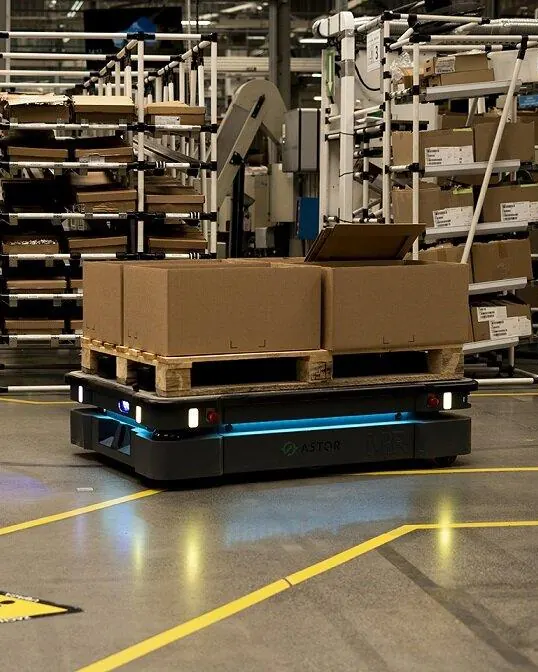
In many plants, the biggest losses happen between machines rather than inside them. Parts reach the line late, work in progress waits for a forklift, and aisles get congested at shift change. That is why we treat factory automation as a complete material flow, from the warehouse to the line and on to shipping. We also review every product option against your existing lines, floor layout and shift pattern.
As a distributor, we work directly with global manufacturers. This lets us narrow down the right product group for your needs and run quotation and sourcing through a single point of contact. In addition, our customer network spans manufacturing, automotive, hospitality and healthcare. We use that perspective to shortlist options that suit your facility instead of offering a one-size-fits-all proposal.
Common bottlenecks on the production floor
Waiting time between lines
When operators move materials between stations by hand, the line stops more often. Skilled staff spend time pushing carts instead of running machines, and hitting the planned output per shift gets harder.
Forklift traffic and safety
In narrow aisles, forklifts and pedestrians share the same space. This raises the risk of collisions, and at peak times congested aisles slow down every delivery to the line.
Repetitive, physically demanding tasks
Palletizing, machine loading and part transfers are tiring jobs. Moreover, staffing these tasks on every shift and keeping experienced operators on them is a constant challenge for plant managers.
Rigid infrastructure
Fixed conveyors need rework whenever the product or layout changes. As a result, every change to the production plan costs you time and money before the line runs smoothly again.
Factory automation use cases
These are the scenarios where manufacturers most often consider robotics. In each case, the right solution depends on your layout, payloads and throughput.
Material flow between lines
Autonomous mobile robots (AMRs) carry totes and work in progress between stations along the routes you define. Operators stay at their machines, while transport keeps running throughout the shift.
Line-side supply from the warehouse
Robots bring raw materials and components from the warehouse to line-side stock points. They also collect empty containers on the way back, so excess stock does not pile up at the line.
Palletizing and depalletizing
At the end of the line, industrial robots stack cartons onto pallets in a set pattern or unload incoming pallets. This takes heavy, repetitive lifting off your staff.
Machine tending and pick-and-place
Robot arms load parts into CNC machines, presses or injection molding machines and remove the finished parts. In pick-and-place tasks, they sort parts and transfer them to bins or conveyors.
Internal transport of semi-finished goods
AMRs and tugger robots move semi-finished goods between departments or buildings. Consequently, you need fewer forklifts, and traffic in your aisles becomes far more predictable.
Clean aisles and production halls
Autonomous cleaning robots clean large production areas and aisles on the schedule you set. This keeps floors safer and frees your cleaning staff for areas that need closer attention.
Robotics and automation solutions for manufacturing
Four product groups come up most often in manufacturing projects. You can find details on each one on our robotics and automation page.
Industrial Robots
Handles repetitive tasks such as palletizing, machine tending, welding and assembly at a steady, precise pace.
Autonomous Mobile Robots (AMR)
Moves materials between stations and the warehouse without fixed conveyors or changes to your current layout.
Intralogistics Systems
Helps you plan the flow from warehouse to line and from line to shipping as one connected system.
Machinery & Equipment
Brings the machinery and equipment you need for line upgrades or capacity expansion under a single supplier.
How we approach factory automation projects
Every factory automation project starts with your requirements. First, we review which tasks suit automation, where the bottlenecks are and how your floor is laid out. Then we share these details with our global manufacturing partners and agree on the right product group and configuration. Where it makes sense, we suggest starting small with a pilot, because results on your own floor are the best basis for a decision.
Once you approve the quotation, we manage sourcing, import and delivery. This means your team does not have to deal with customs, freight or paperwork. In selected projects, we can also offer local assembly or production. Meanwhile, we clarify the scope of installation, training and service with the manufacturer during the quotation stage, so you know from the start who handles what.
For global data on industrial robot adoption, the International Federation of Robotics (IFR) publishes its annual World Robotics reports.
Four steps from need to delivery
- 01
We define the need together
We start by listening to your operation, workflows and goals. Then we agree with you on which tasks are a good fit for automation.
- 02
We match the right solution
We select suitable products from the portfolio of global manufacturers we represent and share technical documents and alternatives with you.
- 03
We clarify the offer and scope
Pricing, lead time, installation, training and service scope are agreed together with the manufacturer at the quotation stage.
- 04
We manage import and delivery
We handle sourcing, import and delivery through our distribution network in Turkey and the Middle East. For selected projects, we also consider local assembly.
Frequently asked questions
What is the difference between an AMR and an AGV?
An AGV (automated guided vehicle) follows a fixed path marked by magnetic tape, wires or floor markers. An AMR (autonomous mobile robot) uses sensors and a map to plan its own route and steer around obstacles. That makes AMRs more flexible in plants where layouts change often. However, an AGV can still be a good fit for fixed, repetitive routes. We help you decide based on your actual routes.
Can robots work with our existing lines and WMS?
Many industrial robots and AMRs offer interfaces for PLC, MES or WMS (warehouse management system) integration. However, the scope depends on the software you use and the connectivity options the manufacturer provides. That is why we ask about your current systems before quoting and check compatibility with the manufacturer. This way, you lower the risk of surprises after installation.
What information do you need to prepare a quote?
To begin, a short description of the task you want to automate is enough. After that, payload weight and dimensions, route lengths, aisle widths, shift patterns and floor conditions help us move faster. A floor plan and a short video of the area are also very useful. With these details, we work out a suitable configuration with the manufacturer and send you a clearly scoped quote.
Can we start with a pilot project?
In many factory automation projects, starting with a single line or route is a sensible first step. A pilot shows how the robot performs in real conditions and how your team adapts to the new workflow. During the quotation stage, we check with the manufacturer whether a pilot is possible and agree on its scope, duration and terms. If the results are positive, you can then roll the solution out to other lines step by step.
How do installation, training and service work?
The scope of installation, operator training and after-sales service varies by product and manufacturer. For this reason, we clarify these points with the manufacturer during the quotation stage and state them clearly in your quote. As a result, you know from the start who does what, what the training covers and whom to contact for service. In selected projects, we also review local assembly options at this stage.
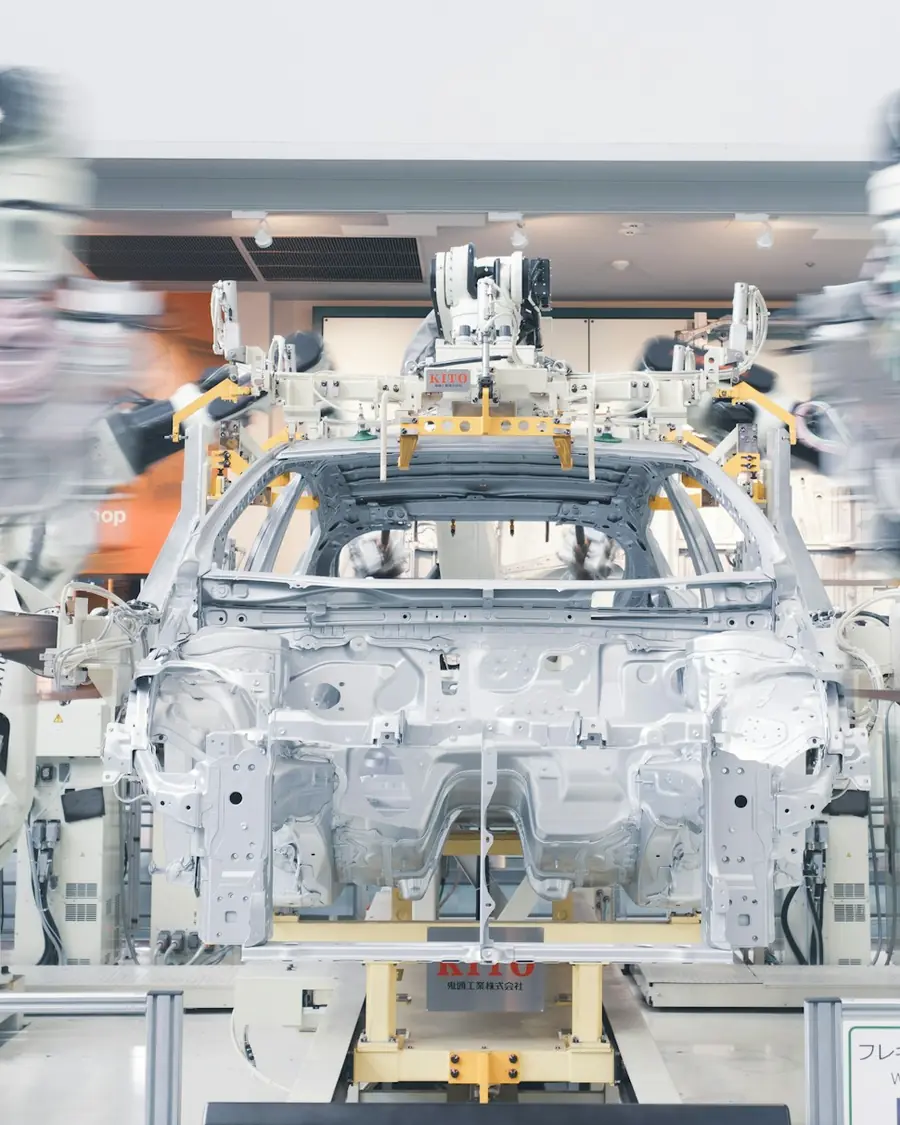
Let's discuss your factory automation project
Tell us about the bottleneck in your plant, the task you want to automate and your goals. Our sales team will review your needs and come back to you with suitable product groups and manufacturer options.